Game Knowledge Base
Ricochet System
Projectiles fired by certain ship and aircraft guns in Modern Warships can ricochet off a target's surface.
Ricochet probability depends primarily on the impact angle, as well as the weapon caliber. This makes the choice of aiming point, attack direction, and your ship's position relative to the enemy even more important.
How Ricochets Work
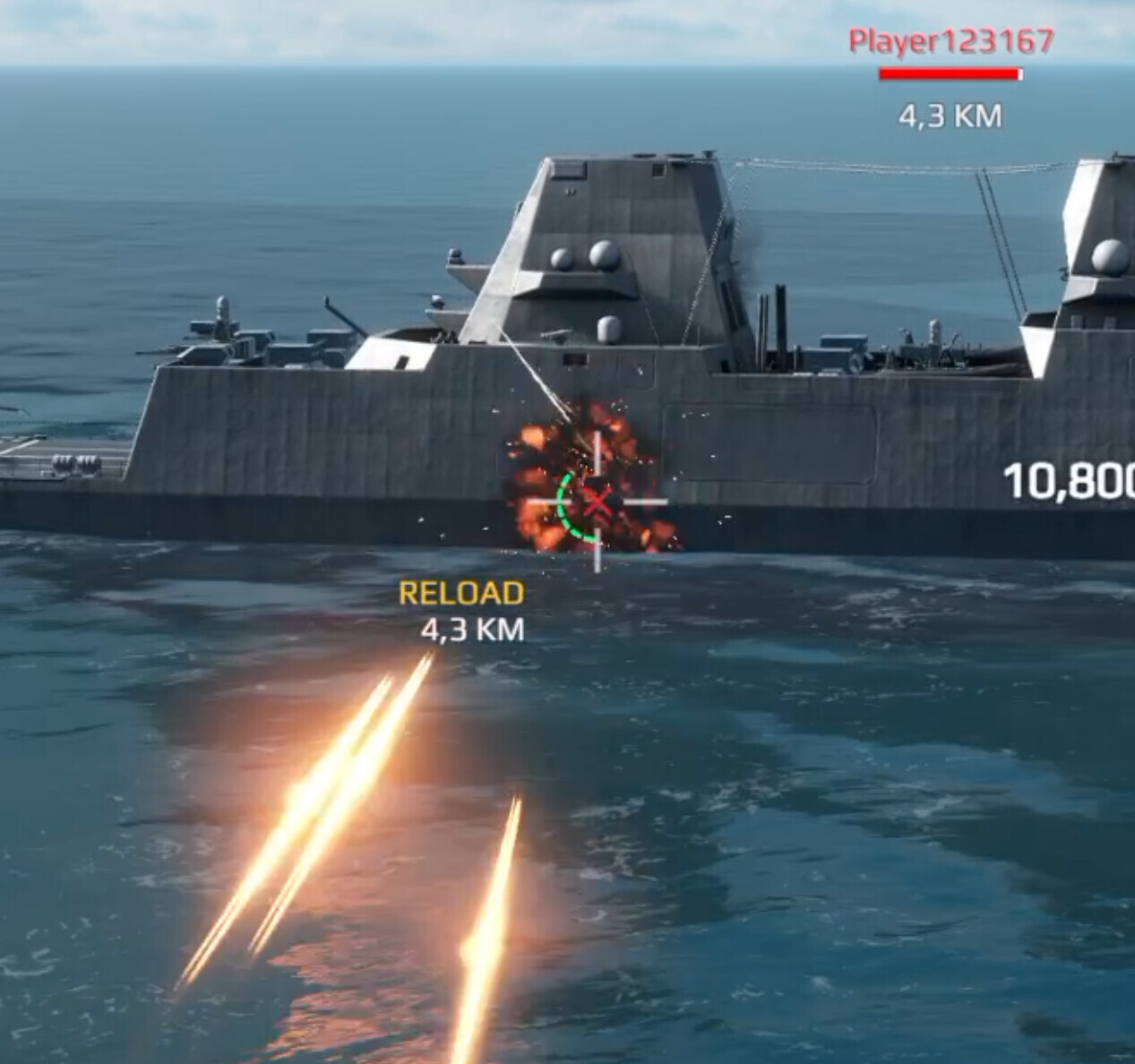
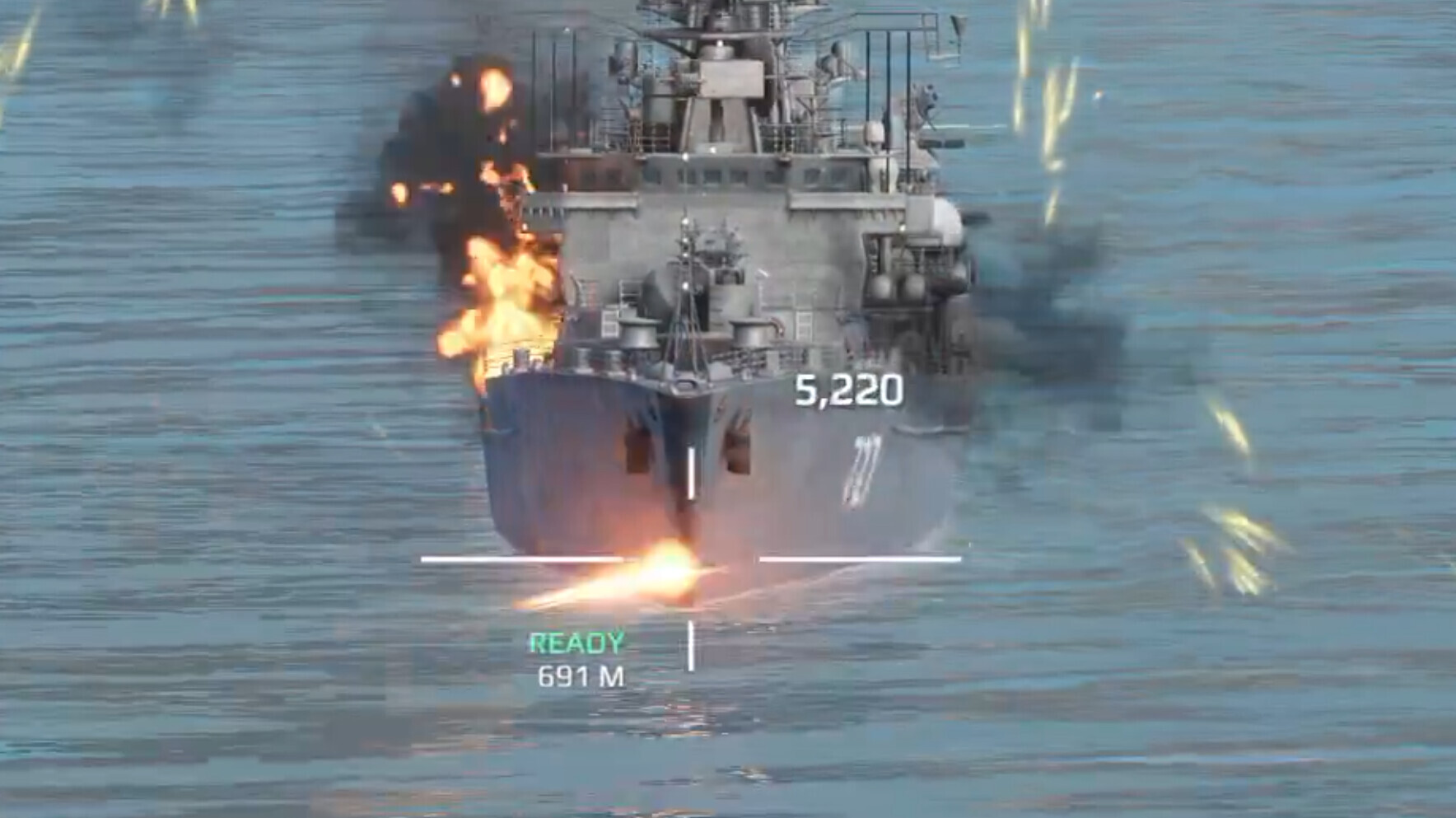
The main factor is the angle at which a projectile strikes the target's surface.
Ricochets are impossible on a direct or near-direct hit.
The closer the projectile's trajectory is to a tangent relative to the target's surface, the higher the chance of a ricochet. However, even at a suitable angle, a ricochet is not guaranteed.
This means that not only the overall position of the ship matters, but also the specific surface the projectile hits.
Which Projectiles Can Ricochet
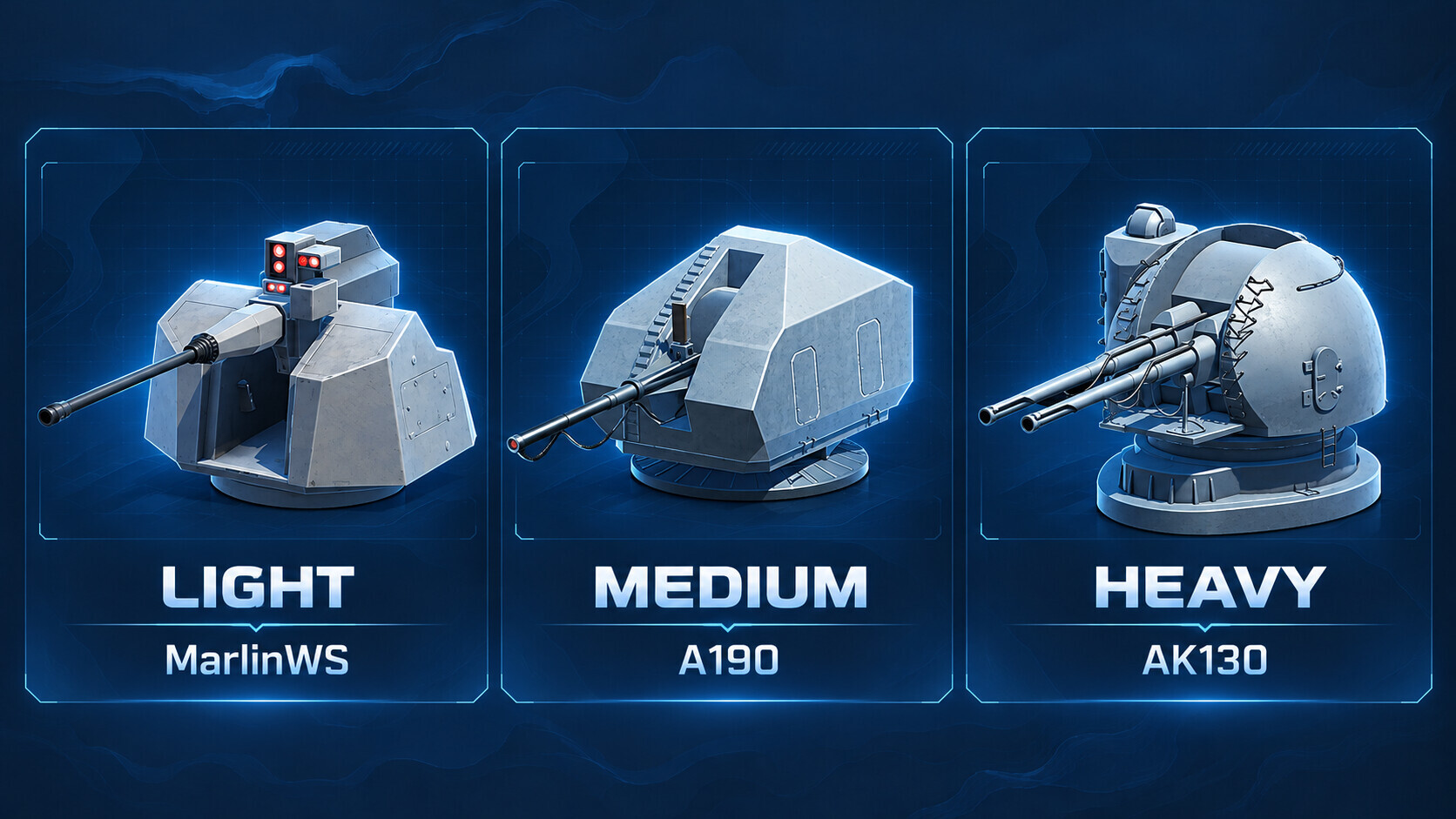
Guns use four ricochet profiles. In general, lighter projectiles ricochet more often, while heavier projectiles are less likely to do so.
| Profile | Example Weapon |
| UltraLight | 2A42 on the Ka-52 Hokum helicopter |
| Light | Marlin WS |
| Medium | A-190 |
| Heavy | AK-130 |
The profile affects ricochet probability, but the impact angle remains one of the key factors.
Hit Indicators
You can identify a ricochet directly during battle.
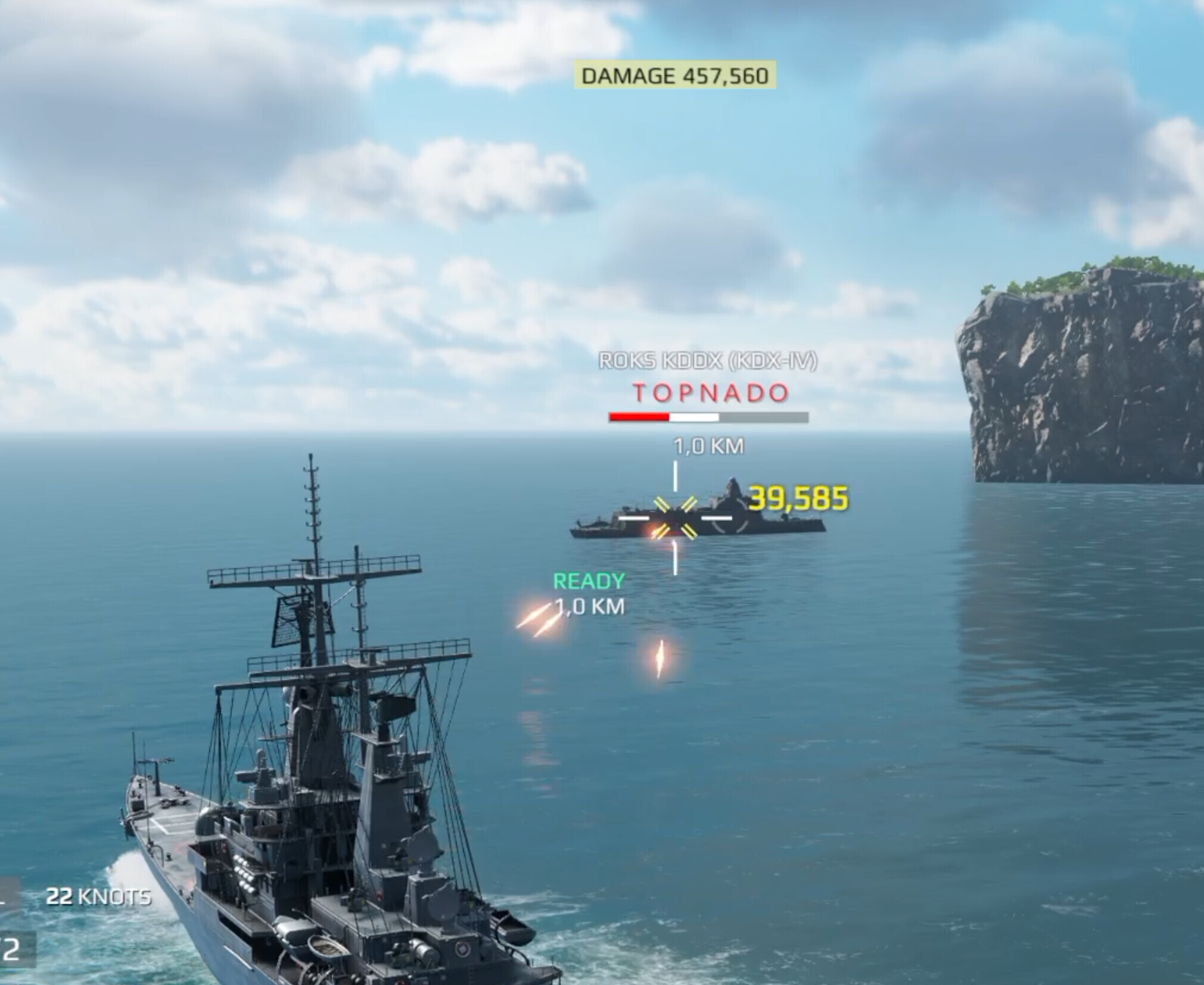
When a projectile ricochets, the visual effect at the point of impact and the projectile's trajectory change, while a corresponding indicator appears near the crosshair.
Ricochet
A red X indicates that the projectile ricocheted and dealt no damage to the original target.
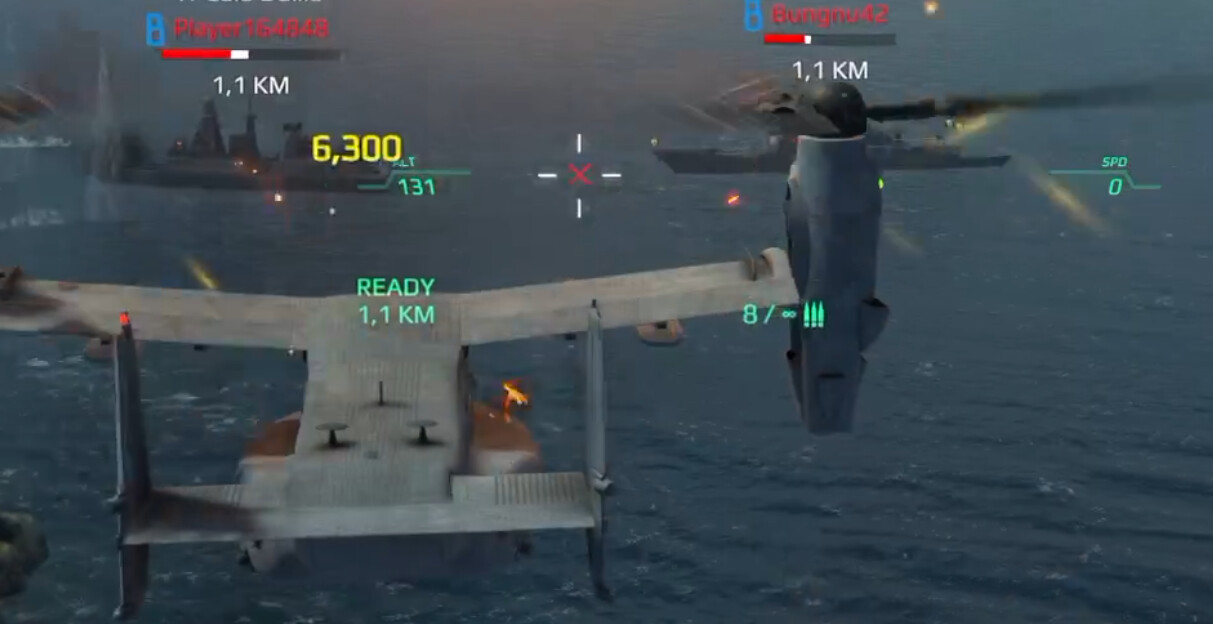
Information about the ricochet is also displayed in the HitLog.
Critical Hit
A yellow marker indicates a critical hit that deals increased damage.
What Happens After a Ricochet
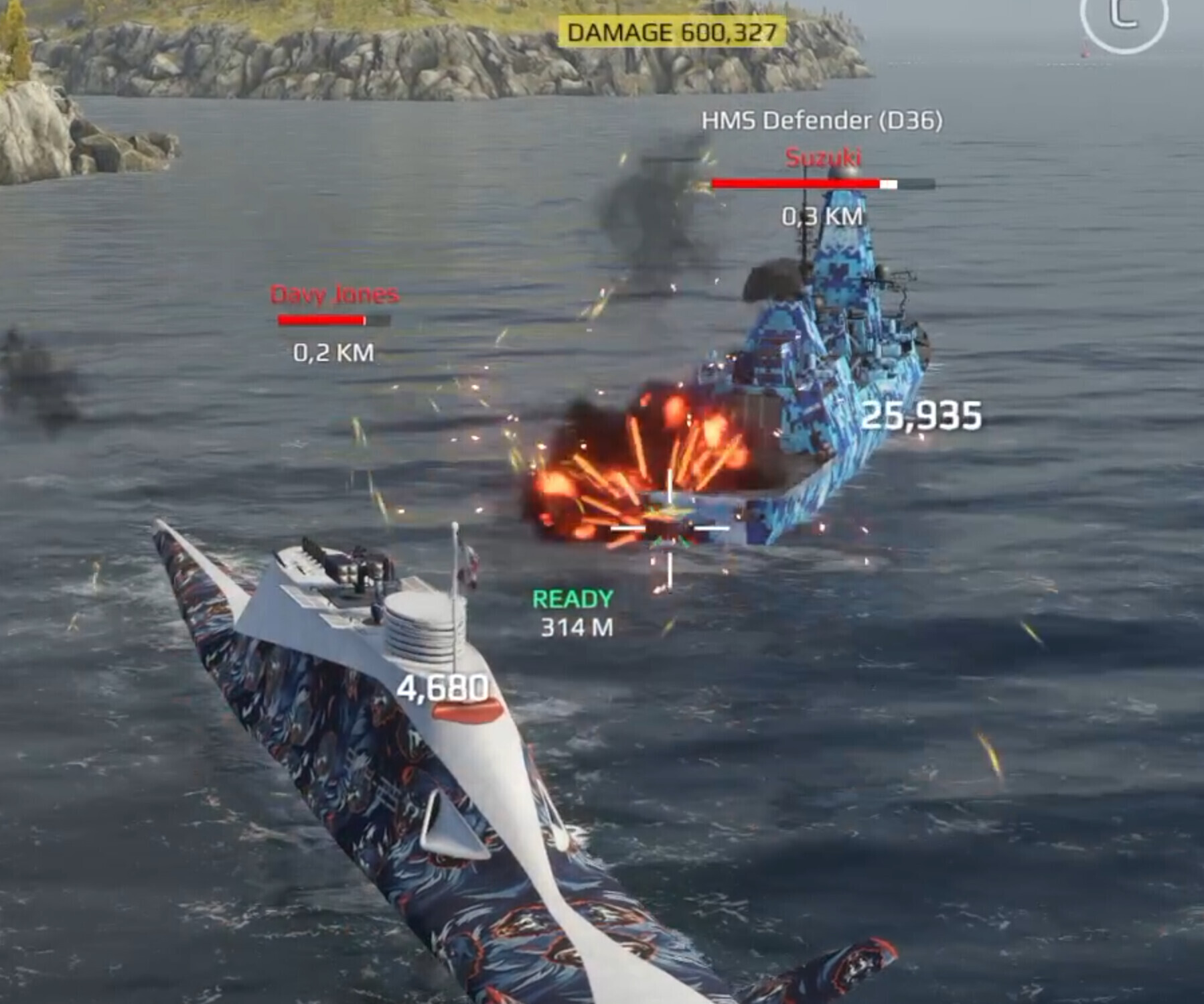
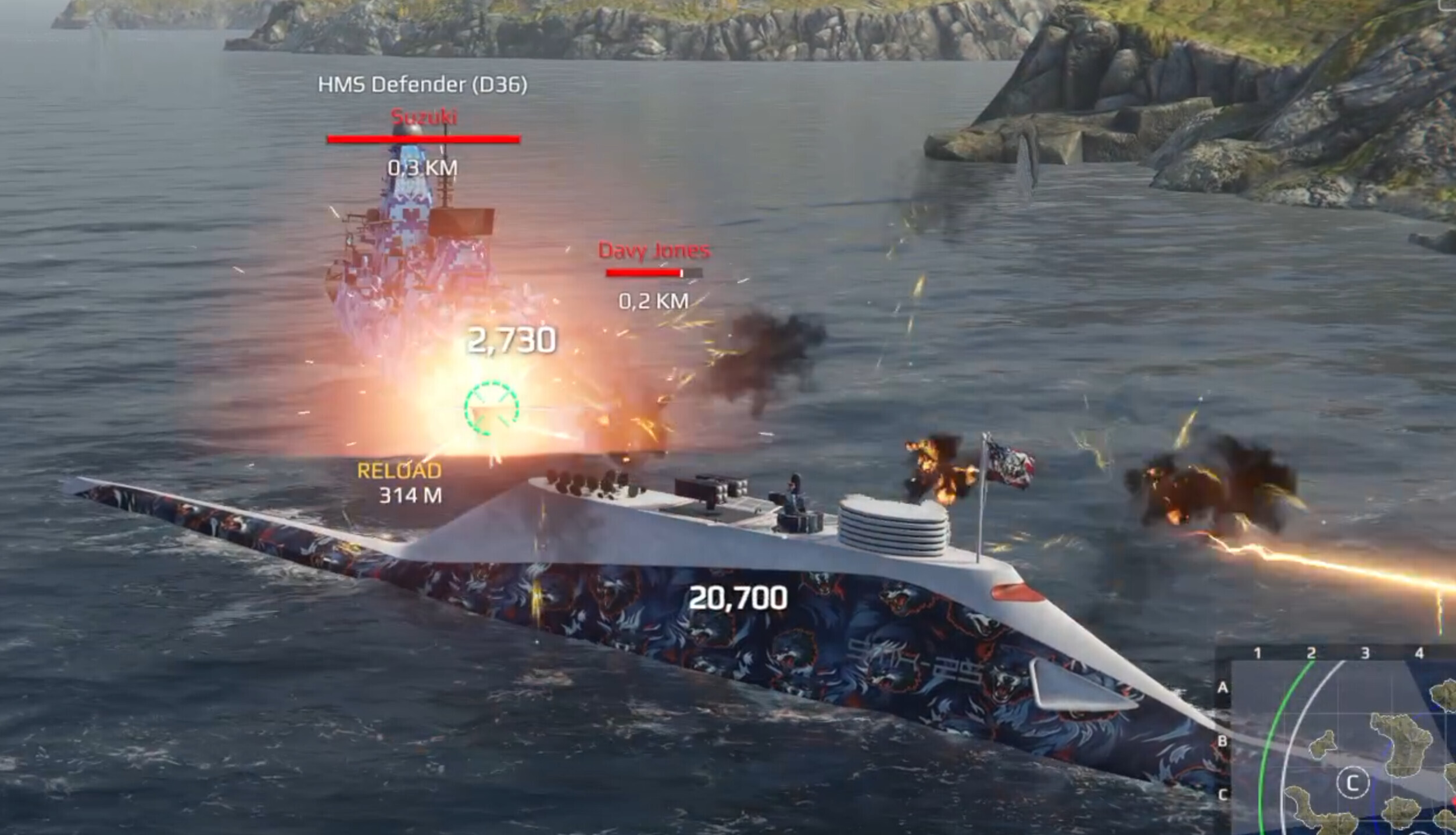
When a projectile first ricochets off a surface, it deals no direct damage at the point of impact.
After the ricochet, the projectile:
- loses speed;
- changes direction;
- continues flying along a new trajectory.
If the projectile then hits the same target again or strikes another target, its direct damage is reduced by 50%.
In other words, a projectile does not disappear after ricocheting and can still deal damage.
Visual Effects and Sounds
New visual effects have been added to make ricochets easier to recognize during battle.
Ricochet sounds have also been reworked and now differ depending on the weapon caliber.
Air Attacks
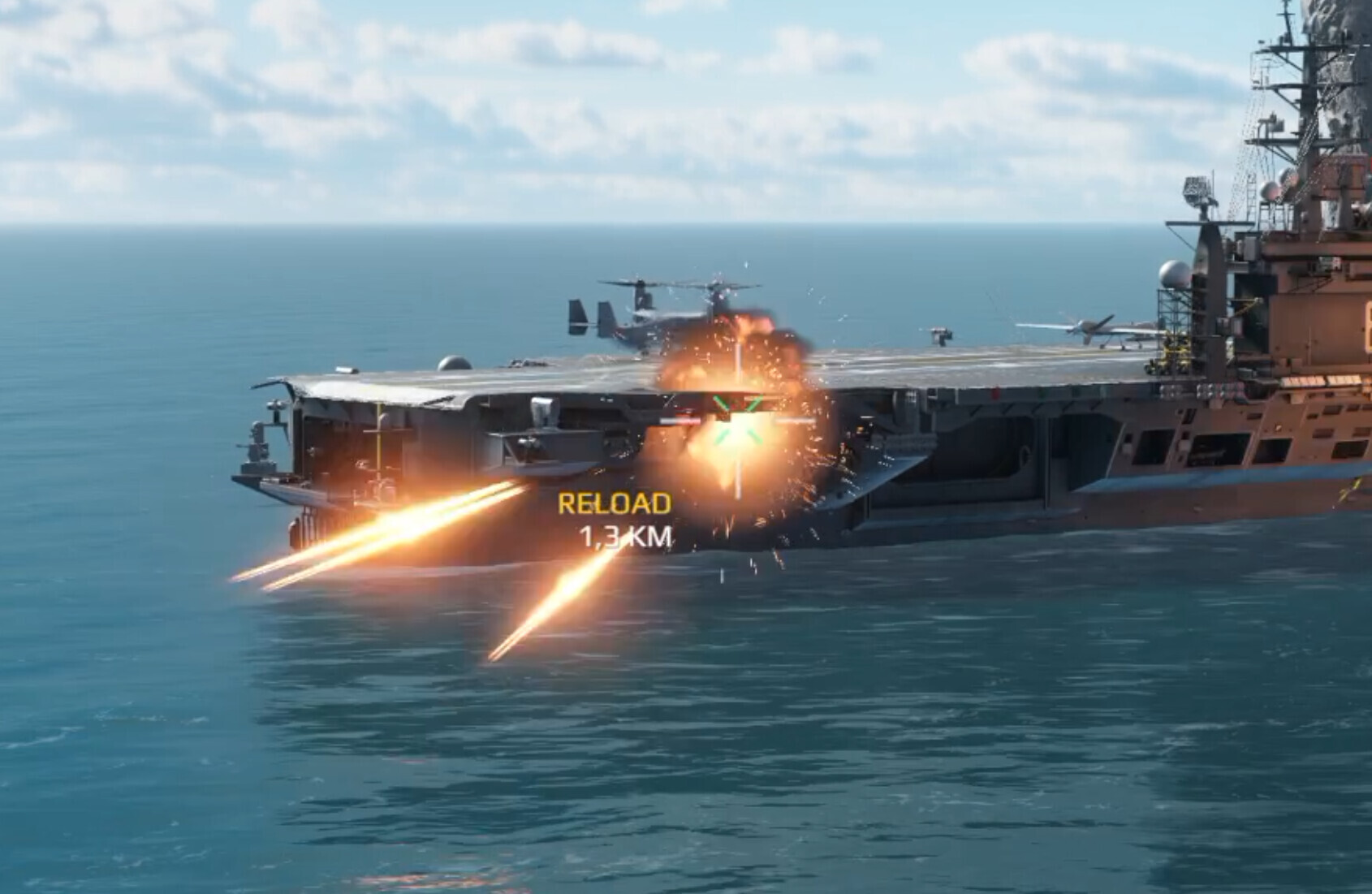
The ricochet system applies not only to ship-mounted guns, but also to ballistic projectiles fired by aircraft guns.
The impact angle is just as important when attacking from the air. When choosing your approach, try to strike the ship's surface at an angle closer to a direct hit to reduce the chance of a ricochet.
Particularly interesting situations can occur when several enemy ships are positioned close together. After ricocheting, a projectile continues along its reflected trajectory and may hit a nearby target. This means that choosing the right attack angle with a helicopter or other aircraft equipped with a ballistic gun can potentially deal additional damage to another ship.
For example, the UltraLight profile is used by the 2A42 gun mounted on the Ka-52 Hokum helicopter.
Which Weapons Use the Ricochet Mechanic
The ricochet system applies to ballistic projectiles fired by ship and aircraft guns.
The mechanic does not apply to:
- railguns;
- laser weapons;
- certain other special weapons;
- ship-mounted autocannons;
- AA systems.
There are also exceptions among ship-mounted guns.
For example, the main guns of the USS Massachusetts (BB-1012) are MJ-L-12 railguns. Their projectiles do not ricochet.
How to Use Angles in Combat
When Attacking
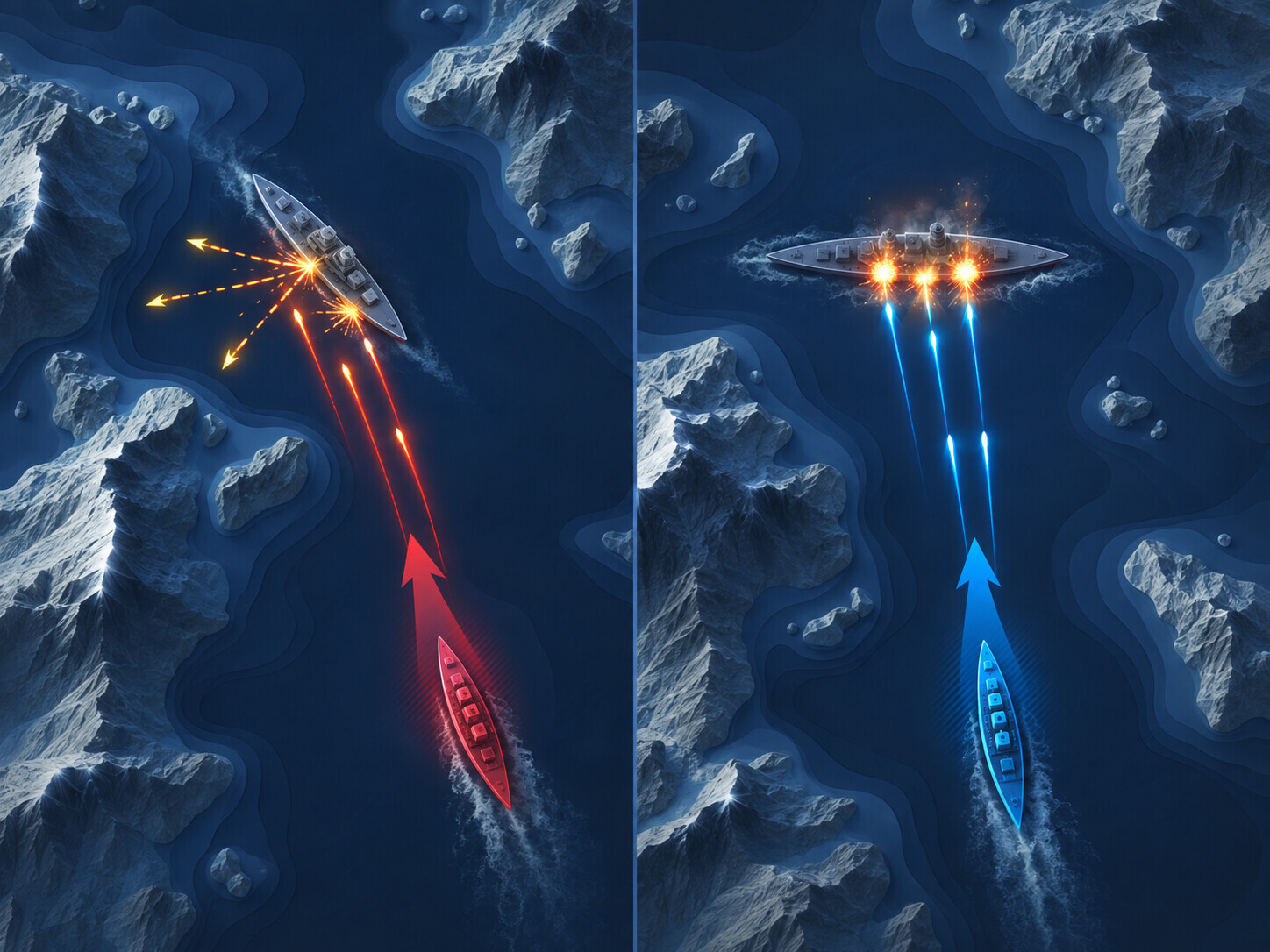
When firing, try to aim at a surface that the projectile will strike at an angle closer to a direct hit.
When aiming manually, it can sometimes be more effective to shift your fire from the hull to the superstructure or another part of the ship if its surface presents a more favorable angle.
However, hitting the superstructure does not automatically prevent a ricochet. The result always depends on the specific angle at which the projectile meets the surface.
When Defending
Angles can also be used when positioning your own ship.
By turning your hull so that incoming enemy projectiles strike its surfaces along a more glancing trajectory, you can increase the chance of a ricochet.
This can help you avoid direct damage from individual hits, but it is not guaranteed protection against an entire salvo.
Ship Geometry
Hull shape also affects the effectiveness of gunfire.
The sloped and streamlined surfaces of modern ships create different impact angles for incoming projectiles. As a result, attackers need to pay closer attention to both their direction of attack and the exact point they are aiming at.
Hull geometry matters, but its effect always depends on the specific angle of impact.