Game Knowledge Base
Classification of Missiles
Just like in real life, missiles in our game are an essential part of any modern ship's arsenal. Unlike naval artillery, they offer a much wider range of tactical applications and allow you to engage a large variety of targets.
Officially, missiles in the game are divided into two categories: ASMs (Anti-Ship Missiles) and SLBMs (Submarine-Launched Ballistic Missiles). While the former are the most common and diverse, the latter are designed exclusively for submarines and can be far more lethal in certain situations thanks to their unique guidance systems. But let's take it one step at a time!
Anti-Ship Missiles (ASM)
Anti-ship missiles are designed for high-precision strikes against enemy vessels at almost any range. To launch most of them, simply select the missile battery in your weapon selector, aim at the target, wait for the lock-on indicator to turn green, and press the launch button. If the target is out of range, the indicator will stay yellow, warning you that the distance is either too short or too long.
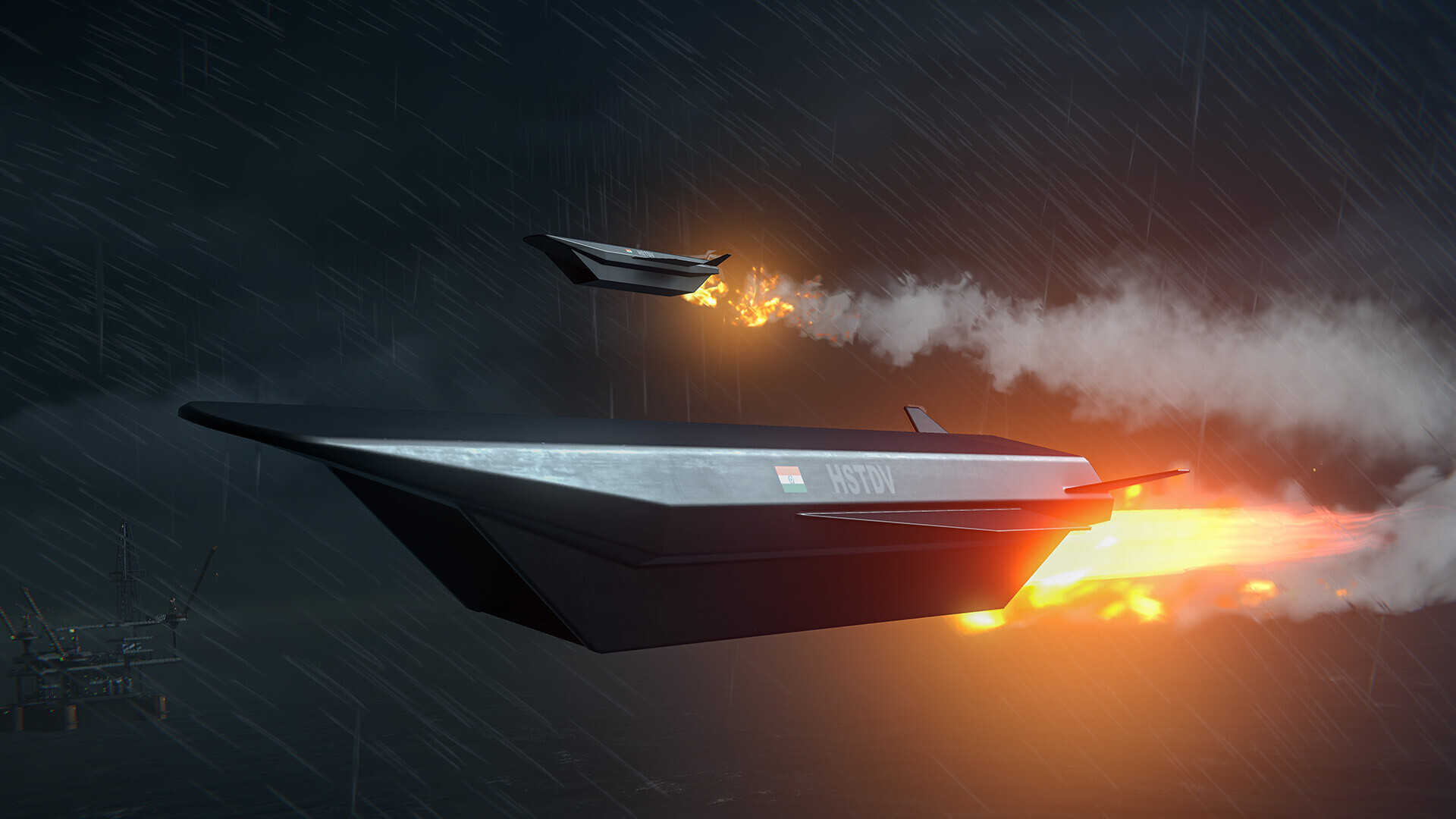
However, you should keep in mind the layout of the launch silos on your ship and the flight trajectory of the missiles at close range. For instance, if a missile accelerates rapidly right off the launch pad and the silo is positioned at an acute angle, firing at an enemy directly behind you will most likely result in a miss. To avoid such mishaps, take your ship and its arsenal for a spin on the firing range in "Test Drive" mode—there you can safely test your weapons and learn the specific quirks of your vessel.
ASM Subclasses
Not all anti-ship missiles are created equal. The game features unofficial ASM subclasses that differ drastically in their combat application, not just in their damage stats or flight speed at various stages.
Anti-Submarine Missiles (ASW)
This missile subclass is capable of striking not only surface ships but also submerged submarines.
The way you use this subclass differs significantly from the standard approach. After launch, the missile rapidly crosses the distance through the air and drops its warhead—a compact torpedo on a parachute—in the target area. Once in the water, the torpedo engages its engine, picks up speed, and homes in on the enemy.
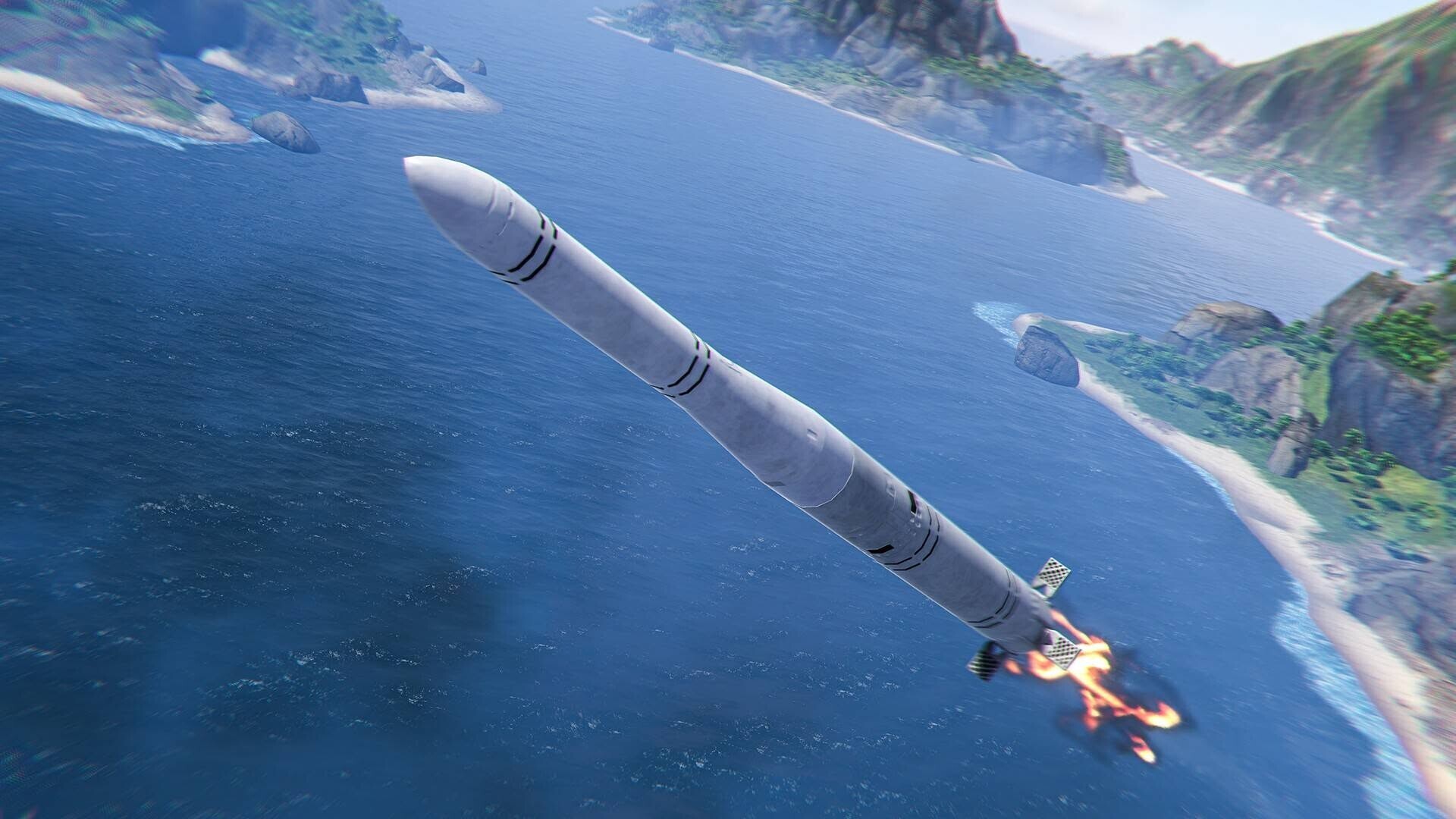
At first glance, this method of attack might seem unusual or even questionable, as the missile doesn't hit its target as quickly as a standard one would. However, this approach offers key advantages in a number of situations.
For example, if there is an obstacle between your ship and the target that a regular torpedo would crash into, an anti-submarine missile will easily fly over it and deliver its warhead right to the enemy. Furthermore, in cases where your standard torpedoes are slow or lack range, and you need to strike a spotted submarine at long range as quickly as possible, an ASW missile is the perfect solution.
Anti-Aircraft Missiles (AAM)
In capable hands, this type of missile can effectively destroy enemy aircraft, eliminating one of the main threats to your team. If there are no enemy planes or helicopters in the air, they can still be fired at surface ships, although their effectiveness in this role will be significantly lower compared to any classic anti-ship counterparts.
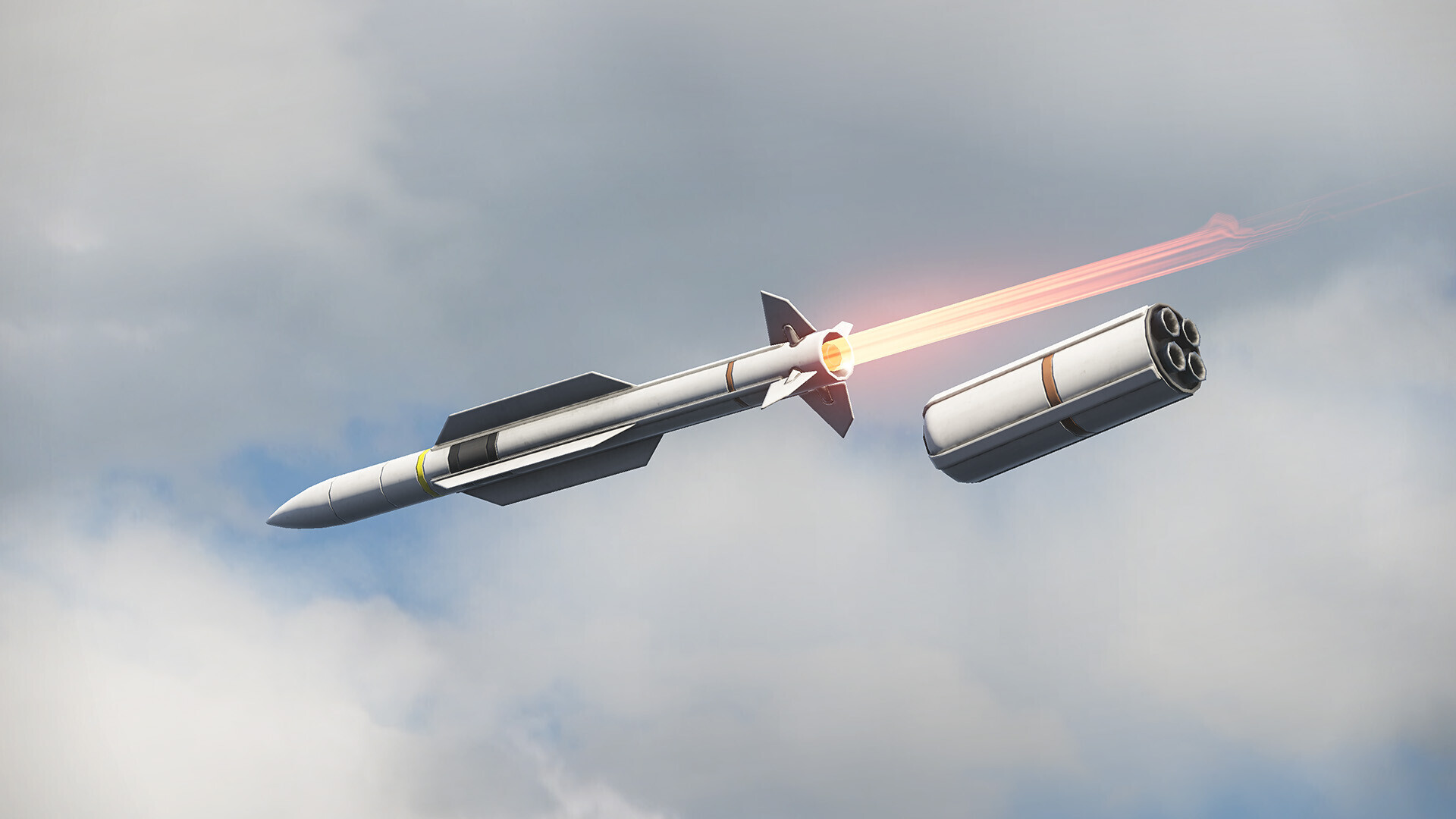
Before launching a missile, you should keep in mind that aircraft are equipped with countermeasures that have a high reload speed. They reload significantly faster than shipborne systems. For this reason, you need to quickly assess the distance to the target and the missile's flight speed before firing; the longer the missile takes to reach the target, the more time the pilot has to deploy countermeasures and save their aircraft.
There are two main, highly effective tactics for using anti-aircraft missiles. The first is attacking from minimum range and firing almost point-blank, leaving the pilot with simply no time to react and deploy their defenses. The second is attacking during their reload window—firing immediately after the target has already expended its countermeasures while under fire from your or an allied ship's AA defenses.
ASMs with Cluster Warheads
In this context, it is worth clarifying that the key feature lies not so much in the unique type of the missile itself, but in the design of its warhead. Unlike classic ASMs that deal damage upon direct contact, cluster weapons operate on a different principle. The carrier missile delivers submunitions to the target area, and at a predetermined altitude, the nose cone opens up, releasing a dense cloud of projectiles across the entire hull of the enemy ship. It is also worth noting that the submunitions themselves cannot be intercepted by air defense systems.
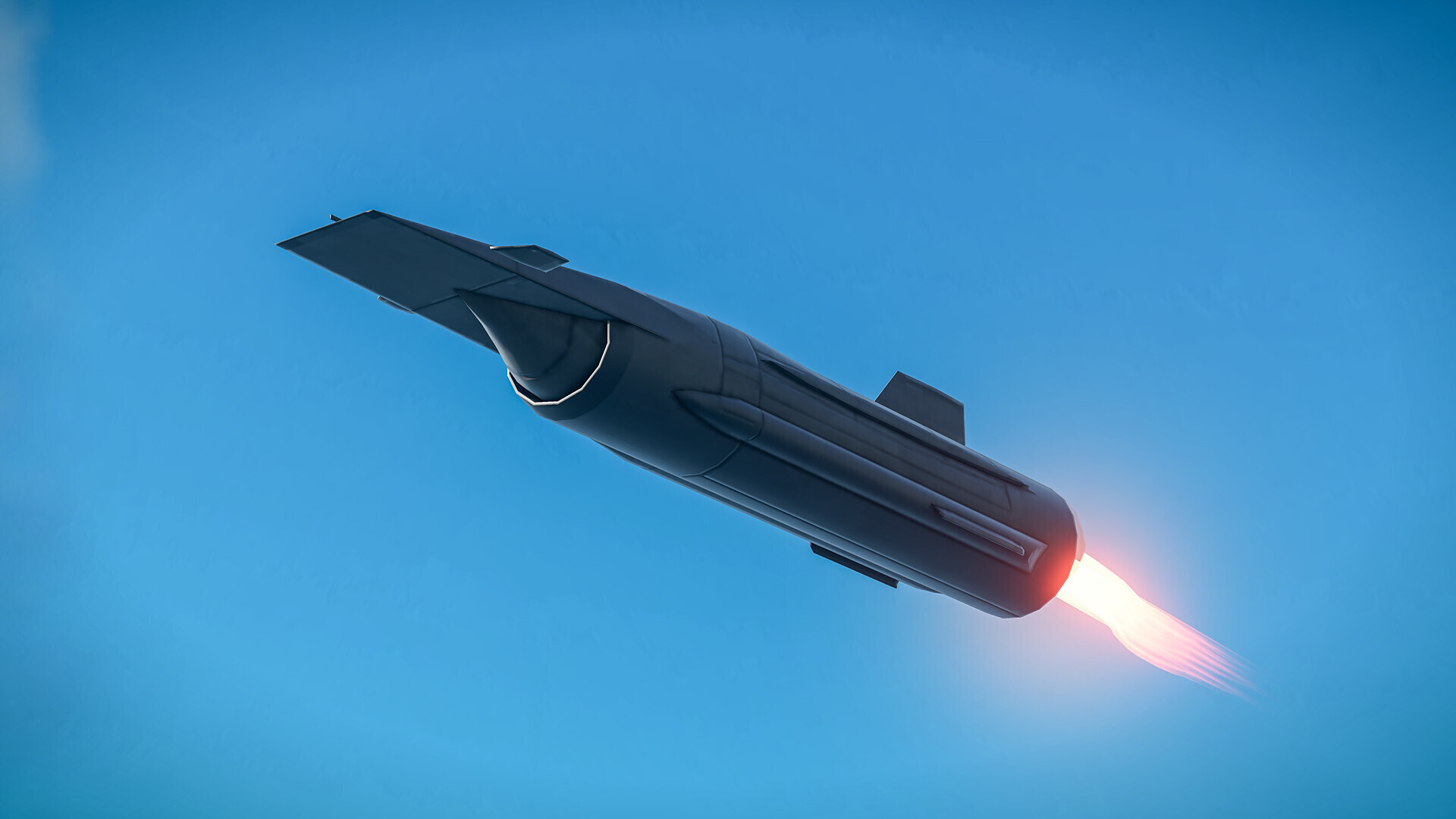
When deploying this type of missile in combat, you must account for strict limitations regarding the minimum firing range. Using such weapons at close distances is impossible, as the missile needs time to accelerate, establish its flight path, and have enough space to properly deploy its cluster payload. Therefore, it is most effective and logical to fire missiles with this type of warhead from medium to long ranges.
Laser-Guided Missiles
This is one of the most interesting and versatile types of weaponry, highly valued by experienced players.
Guidance is performed via a laser beam: the player must keep their crosshairs on the enemy ship from the moment of launch until impact. The flight trajectory is highlighted by a guide line.
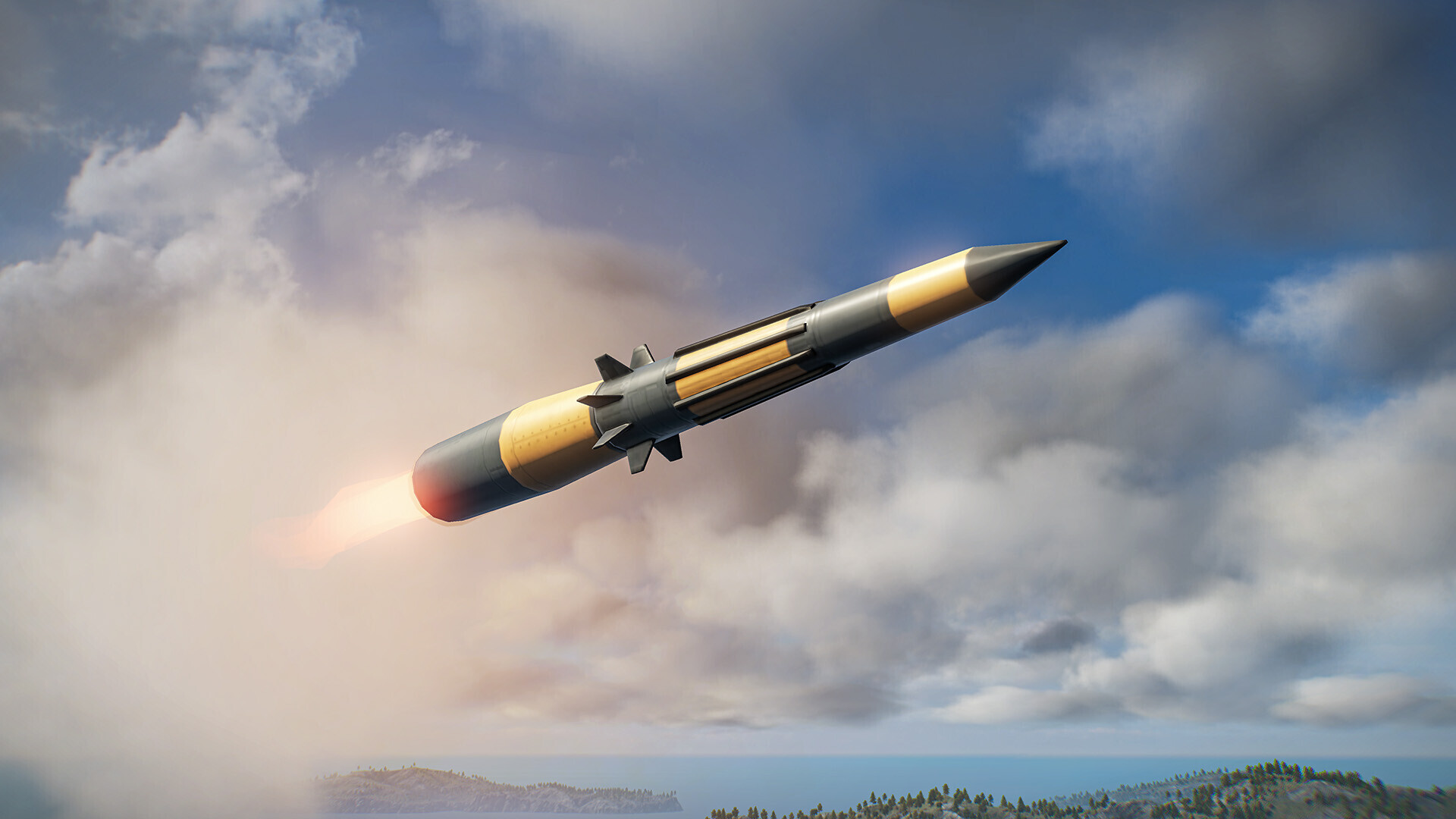
The main advantage of these missiles is the ability to change their trajectory mid-flight and launch them even before establishing visual contact with the enemy. Many professional players use this for a form of reconnaissance: the missile is fired in the suspected direction of the enemy team, and the return fire from their ship's AA defenses gives away their position.
Additionally, you can curve the trajectory around cover to strike a hiding enemy. However, you will need to learn through practice how to time your launch and skillfully maneuver the laser so that you don't just fire a pretty missile, but actually hit the enemy effectively. There is another useful and simpler trick: launch the missile from its silo in advance and let it accelerate to maximum speed. At this point, it is crucial to switch to any other weapon immediately after firing. After that, you can select the missile battery slot again and aim at the enemy. A missile that has already reached its top speed has a much higher chance of successfully hitting the target.
Submarine-Launched Ballistic Missiles (SLBM)
As the name suggests, missiles of this class are an exclusive type of weaponry designed solely for submarines.
Gameplay when using SLBMs differs significantly from using other types of weapons in the game. During battle, selecting this missile automatically shifts the player into a special top-down map view. This mode displays a crosshair indicating the point of impact and the blast radius, as well as a special dotted line clearly showing the flight path. Additionally, it features a countdown timer to impact, which adjusts dynamically depending on the distance to the target and the speed characteristics of the specific missile.
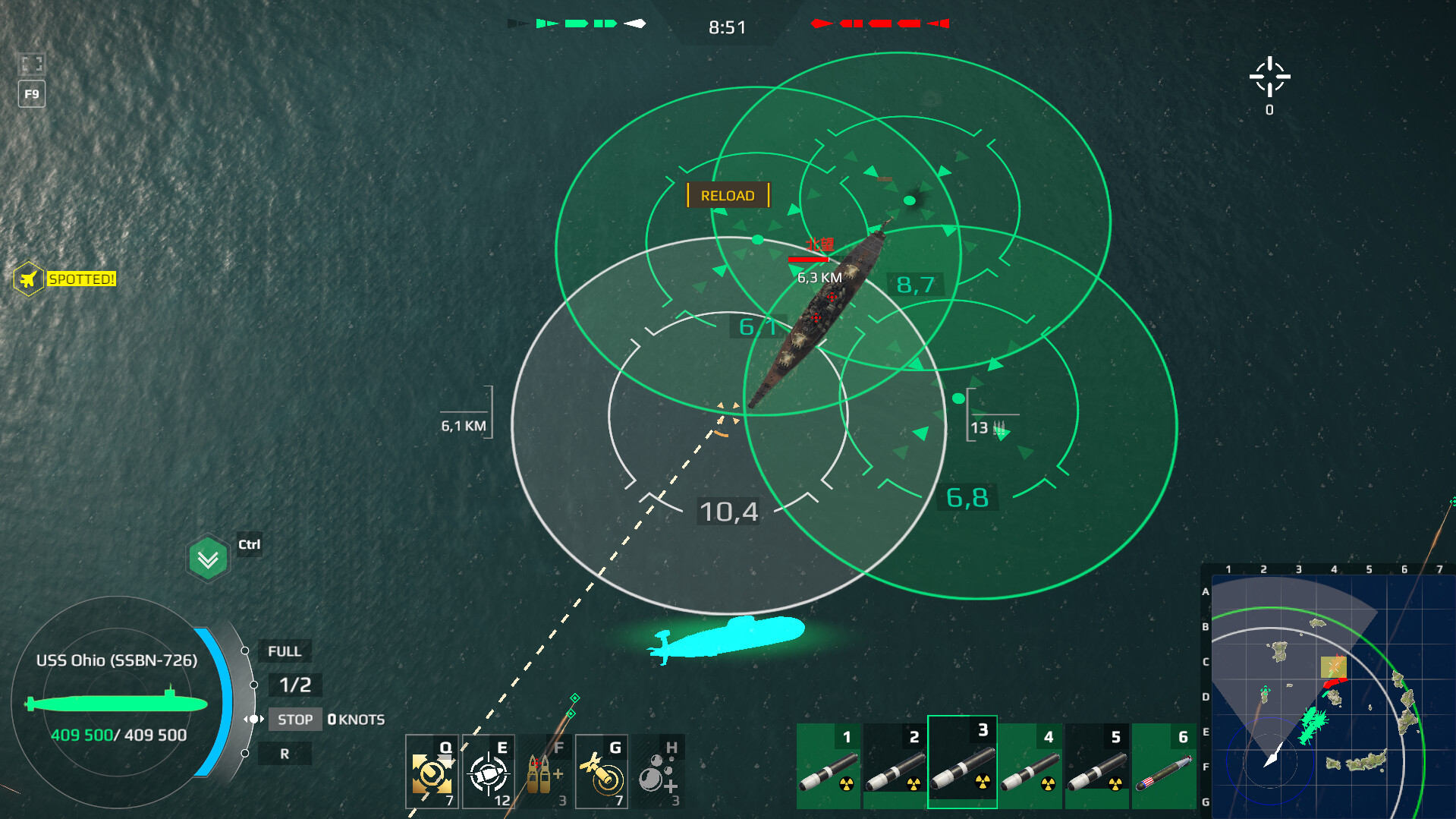
A missile can be launched at almost any moment and at any point on the map, which is incredibly effective when an enemy has slipped out of your allies' line of sight or their position has been calculated based on the trajectories of their incoming fire. However, before launching, keep in mind that despite their high ballistic trajectory, maps feature massive obstacles and high terrain that missiles cannot always clear.
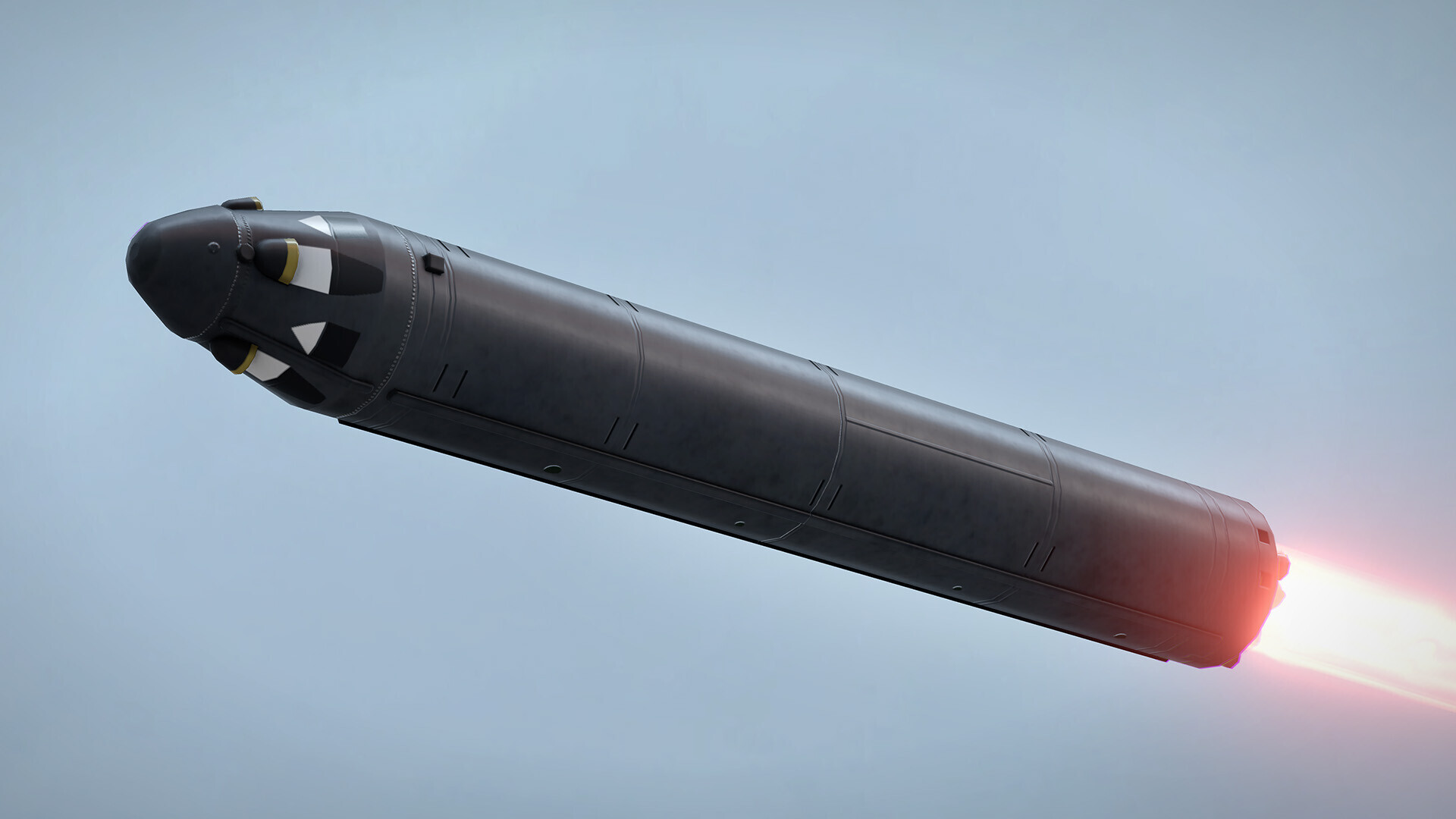
It is also worth noting that at the very beginning of a battle, the use of SLBMs is temporarily locked. This restriction was introduced to prevent players from getting hit by a missile strike the second they spawn at their starting positions. Furthermore, this brief pause gives the submarine commander a chance to assess the enemy's deployment and choose the most optimal route to maneuver.